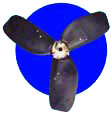

Frequently asked Questions
1: Why an all composite propeller ?
2: How does the unit operate in reverse ?
3: Is the pitch user adjustable – Can it be done underwater ?
4: Why don't the blades fold up fully ?
5: Do I have to set the pitch when the unit is received ?
6: Can I adjust the reverse pitch independently?
7: Do I need to take the unit apart before mounting it on the shaft ?
8: How strong are the composite blades ?
9: Should I buy spare blades to carry on board ?
10: How is the unit lubricated - how often should it be greased ?
11: Does the unit run smoothly ?
12: How much tip clearance is required ?
13: How robust is the internal Vectran drive mechanism?
14: Will an SDC Propeller improve my motoring performance ?
15: Will an SDC propeller improve sailing performance ?
16: What does the unit weigh ?
# 1: Why an all composite propeller ?
The design of this unit has been driven to address the changing requirements from the ever increasing market share that Saildrives now occupy in the new build market and thus their overall market share of drive trains.
All Saildrives from the major producers are cast in Aluminium and while they make extensive efforts to address the potential for corrosion that this creates,
the presence of a large area of Bronze from a traditional propeller adjacent to the Saildrive leg generates an electro-potential between the surfaces driven by basic physics that can not be avoided. Zinc anodes can only mitigate this effect. A full electro potential listing of metals in salt water is at: Galvanic Series
In addition all Saildrives have the same reduction ratio in reverse as they have in ahead – quite different from the majority of shaft installations. This requires a different approach to pitch settings in reverse for optimal performance.
While an all composite propeller will eliminate the corrosion potential from a bronze propeller - a composite propeller will not necessarily eliminate corrosion.
This is a complex area and requires specialist input but can be coming from a whole raft of areas. Onboard power, bad grounding, marina grounding, incorrect usage of copper based antifouling paint and even the boat(s) next door.
Incorporating other design features at the same time to eliminate poor reverse thrust, lack of lubrication, smooth engagement, positive mechanical opening and closing and the high drag from fixed propellers will deliver an optimal unit. The advent of new composites now makes this zero based design approach to the optimal propeller design specifically for Saildrives a reality and provides an economic solution to a number of long standing series of outstanding propeller design problems for sailing vessels. The approach adopted will eliminate – not just reduce the corrosion potential of a bronze propeller adjacent to an Aluminium Saildrive leg.
From a design perspective it is best described as a hybrid unit. It is a cross between a feathering and a folding propeller incorporating the best features of each. Like all feathering propellers it has user variable pitch and operates at 100 % thrust in reverse.
In addition all three functions of motoring, reversing and sailing are engaged and folded positively by a mechanical motion – the opposite of all folding units which depend only upon centrifugal force to open the blades and water pressure to close them.
Like all folding propellers – the blades retract from the streamlines to offer minimal drag and the ability to shed anything that is likely to catch on the blades such as lines or kelp. The blades also have progressively pitched ogival foil sections for optimal motoring – whereas the foils on feathering propellers have slightly less efficient symmetric foil sections with fixed pitch down the foil. An ogival foil is flat to the rear and the section of a circle on the front face and is used on all fixed bladed propellers.

Ogival Sectioned Foil Symetric Sectioned Foil
# 2: How does the unit operate in reverse ?
In a nutshell – the unit operates in reverse exactly as it does in ahead.
The blades are mechanically opened and then locked so it will operate exactly as a fixed two bladed propeller in both ahead and astern.
When reverse is engaged the water pressure acting against the blades causes the blade assembly to rotate around the internal boss and in doing so initiates the internal mechanism that positively rotates the blades to an open position.
The internal mechanism continues to rotate the blades around the plane of their mounting bolts until the blades, while acting against the blade springs to ensure a smooth opening motion, come up against their respective pitch stops. At this stage the whole propeller begins to rotate in whichever direction has been selected and continues to operate as a fixed bladed propeller. When sailing - the internal blade springs rotate the blades back into the trailing position where the blades are aligned with the streamlines for minimal drag.
Thus the trailing edge of each blade becomes the leading edge during reversing like a fixed bladed propeller. This is no different from almost all other folding propellers.
What is different is that the blades are held by the design of their mounting bolt and the internal mechanism in their fully open position irrespective of reverse thrust at the same pitch setting that was selected in the ahead direction.
The unit thus operates exactly like a fixed two bladed unit in reverse to deliver similar thrust as such a unit would in ahead.
This will always substantially exceed the reverse thrust available from any competing folding propeller design which all use centrifugal force from the mass in the blade tips in a futile attempt to hold the blades fully open against the reverse thrust of the propeller.
Despite manufactures various claims - All folding propellers in reverse operate with the blades in a semi-open position to deliver mediocre reverse thrust.
# 3: Is the pitch user adjustable – Can it be done underwater ?
The pitch can be very easily and quickly adjusted by the user with just an Allen Key.
At the rear of the propeller body facing aft for easy access is a stainless steel set screw for each blade.
Turning this screw in by one whole turn will increase the pitch by 2”. Likewise a change of pitch of plus or minus 1” can be obtained from ½ a turn of the pitch screw.
This can be easily done underwater with dive gear.
The pitch screws are self locking into the body of the propeller and remain locked after adjustment. They have been machined to provide tolerances for an interference fit that will ensure the screws stay locked.
When the face of the blade that acts upon the pitch screw coincides with the joint line on the mounting surface this equates to a reference point of 12 inches or 300 mm of pitch. This is the most popular setting.
Pitch adjustments can then be made about this reference point.
While the design of the unit accommodates differing pitch settings on each blade it is important to ensure equal pitch settings on the blades.
Unequal pitch settings will lead to vibration, noise and reduced propeller performance.
Mounting the Allen Key in a short length of dowel will ensure it floats if making pitch adjustments underwater.
# 4: Why don’t the blades fold up fully ?
With a composite propeller there is very little mass in the blades and any folding or hybrid design can not utilise this mass to open the blades in reverse by just using centrifugal force as all conventional folding designs do.
For the internal mechanism to operate there needs to be a torque operating against the rotation of the body to provide sufficient force to allow the internal mechanical mechanism to open the blades in both ahead and more so in reverse where the reverse thrust generated from the blades will tend always to fold the blades back into the closed position.
Allowing the blade tips to partially project in the closed position provides sufficient force when the unit is engaged to engage the opening mechanism – yet provides very low incremental drag. Remember on Saildrive applications drag from the frontal area of the leg and lower gear case will always far exceed the incremental drag from the small thin and highly streamlined blade tips. Frontal area basically dominates any drag equation.
We believe that typically in operation one blade will always align in the disturbed streamline off the leg and make no incremental drag contribution.
The design of the unit has made a conscious trade-off of the very small extra tip drag vs the benefits of 100 % reverse thrust and no corrosion potential.
Drag will be less than a typical three bladed feathering propeller for two reasons. There are only two blades not three – and the area projected into the streamlines when the blades are retracted will be substantially less than a feathering unit where the blades are always open.
Thus the hybrid nature of the units design ~ 80 % folding with 20 % feathering from a drag perspective – yet 100 % feathering from a reversing perspective.
# 5: Do I have to set the pitch when the unit is received ?
No. Unless requested otherwise - the unit will be delivered with the pitch targeted to allow the engine to achieve it’s rated max rpm under full load which is required for warranty purposes on all new engines.
This will be based on the information collected from our database of engines in use and comparative data.
Higher pitch settings will increase cruise speed for a given rpm at the expense of achieving maximum engine rpm and higher power output.
Every installation is however different. Exhaust back pressure from design or corrosion, fresh or salt water, altitude, cleanliness of the prop, engine age and compression, auxiliary take-offs such as compressors & alternators will all impact on engine rpm achievable.
Potential boat speed which can be affected by loading and weather will in itself alter engine rpm as the effective pitch that the propeller “ sees” is a function of speed through the water.
Lower boat speeds than normal will translate to slightly lower engine rpm.
Typically we would expect over 90% of users would not need to adjust the pitch from the original setting that was shipped with the unit.
# 6: Can I adjust the reverse pitch independently?
The simple answer is no. The reverse pitch always equals the ahead pitch.
Because all Saildrives have the same reduction ratio in reverse as they do in ahead due to the nature of the bevel gear drive train – Saildrives require the same pitch in reverse as they do in ahead.
The SDC approach of mechanically locking the blades open in reverse provides exceptional reversing performance
in that the unit simply operates as a fixed bladed propeller would in reverse.
Thus there is no requirement to adjust the reverse pitch independently from the pitch setting in ahead.
# 7: Do I need to take the unit apart before mounting it on the shaft ?
The unit is mounted by first unscrewing the front face cover after removing the 3 x M8 316 Grade Stainless Steel locking screws around the forward perimeter.
The boss is then exposed when the body holding the blades is removed from the boss. The internally splined boss of the propeller is then ready to slide
onto the externally splined shaft of the Saildrive unit with the front face piece already fitted.
After the appropriate checks which are covered in the user manual, the unit can be mounted on the spline and the nut tightened up using a standard 25 mm A/F socket drive.
The nut is then locked in via a vernier adjustment with a stainless steel split pin to the boss. After greasing the body of the unit can then slide back over the boss externally locking in the split pin whereupon the front face piece is screwed back on, tightened up and the locking screws re-inserted around the perimeter with Loctite™.
The unit is then ready for operation.
At no stage is there any requirement to remove blades from the propeller body nor are the pitch settings disturbed during this process.
Typically this whole operation would take ~ 5 minutes for someone who had done it previously and a little longer for a first time user.
The operating manual supplied with the unit and available on the web covers this in detail with appropriate pictures and diagrams.
# 8: How strong are the composite blades ?
Clearly the blades are not as strong or as stiff as bronze, but the issue is - are they strong enough for the purpose for which they have been designed.
Virtually all modern aircraft have composite propellers and now structural components.
The DuPont Zytel HTN53G50 blade material contains 50 % glass by weight and is thus both very strong and stiff.
DuPont have extensive technical information on their web page regarding the physical characteristics of the many different grades of Zytel they have available.
Another design issue is that composites and the economics they enjoy allow a blade to be sacrificed in a catastrophic situation. With a substantial impact on the blade tips
( always the first part to hit ) they should sacrifice the blade - hopefully leaving the propeller boss and Saildrive undamaged.
We believe it is better to loose an easily replaceable blade costing ~ $ 100 than a whole propeller or drive train when hitting the ground or a floating log or mooring chain.
This can be very expensive in a Saildrive installation where the whole leg is at risk.
Ropes caught around the unit will simply stall the engine and in each of a number of cases where this has happened to date the unit has emerged undamaged.
The blade design with well rounded leading and trailing edges at the root is designed for these inevitable events.
We have not yet had a blade fail in service and are confident that they are stressed correctly for the application they serve.
Remember composite propellers are now freely available for outboards up to 300 hp.
So in simple terms the answer is – quite strong enough !
# 9: Should I buy spare blades to carry on board ?
Our advice is that if you have a catamaran with no keels that is going to allow the props to hit first if ever grounded – carry a spare set of blades.
If you are heading off on a world cruise with the potential to be in some out of the way places or cruise in high risk areas where there are known
problems such as dead trees or coral heads – then take a spare blade or set.
In many ways the cheapest and best insurance is to carry a cheap fixed 2 or 3 blade unit to get-you-home.
For general use we see no more or less need to carry spare blades on board than you would with any other prop.
We would expect very little demand for spare blades other than in the above situations.
# 10: How is the unit lubricated – how often should it be greased ?
This topic is covered in the user manual but in summary the unit as delivered contains lubricants sufficient until your next maintenance haul out. Each side of the unit will need to be lubricated after removing the small Pozidrive screws located just forward of the blade using a needle nose grease gun. You will need to remove the outer guard off the needle portion of the grease gun.
One hole leads to the internal mechanism in the front of the unit. The other leads to a lubrication groove that carries grease to the surface between the body of the propeller and the internal boss that is connected to the drive shaft.
This then is repeated for the other blade on the other side of the body.
Each of these four grease points should then be filled with a high quality marine grease eg Shell™ Nautilus Marine Grease - NLGI No 2 or equivalent.
Lubrication is covered in detail in the manual supplied with the unit.
# 11: Does the unit run smoothly ?
Yes – this is a factor often commented upon in the feedback we have received from SDC testing coupled with the inherent design attributes.
For any rotating mass the design criteria to minimizing vibration is to first lower the total mass of the rotating assembly and then ensure that the mass is concentrated as close as possible to the axis of rotation.
The SDC Propeller is much lighter than comparable bronze units at under 3.0 kg but more importantly - because of the composite blades being much lighter than the typical bronze blades of say a 2 bladed folder, the mass is in effect much more focused towards the center of the unit thus reducing the Moments of Inertia.
The ogival sectioned foils on the blades with progressive pitch also assist with smooth running.
Combining these factors produces a very smooth running unit that offers minimal vibration and noise.
Blade clearance to the hull is less critical than with traditional folding propellers as the blade tips are a finer section.
They do not require the thicker sections needed to contain the mass required to improve the reversing thrust from the additional centrifugal force in an attempt to hold the blades open in reverse.
# 12: How much tip clearance is required ?
While the design of Saildrives generally provides for more than adequate clearance of any propeller,
some installations such as where the engine is reverse mounted can lead to lower clearances than normal.
This can also occur in narrow catamaran hulls where again the engine is raised in the hull
To obtain clean water away from the water that is dragged forward along with the motion of the hull and impacts on propeller performance - all propellers require clearance from the tips to the hull.
Having low tip clearances can also cause vibration to be transmitted through the hull from the radial disturbance caused by the propeller blades displacing the incompressible water as they sweep past the hull.
Some rules of thumb use 10 % of the diameter – but higher clearances generally have little additional impact on improved propeller performance.
Due to the low boat speeds - typically 6 ~ 7.5 knots involved with low powered displacement yachts – clearance is not as critical as on many applications.
With thin tips, unlike folding propellers which use the mass in the tips to provide reverse thrust from the centrifugal force generated, our empirical experience is that clearance can be lower with virtually no impact on performance or vibration.
We would suggest no less than ½” or 12 mm in a tight situation – obviously more is better.
This is not an issue in the great majority of Saildrive installations.
# 13: How robust is the internal Vectran drive mechanism?
Vectran has only recently become available and has truly exceptional properties.
Only the advent of such materials has enabled a design such as the SDC unit to become viable.
While very expensive – the small quantities used in the unit make for an economical solution.
It has virtually no stretch and some 5 times the strength of steel for a comparable weight.
Using an engineering plastic addresses the corrosion issue targeted in the original design brief.
The tensions involved in the Vectran are very easily calculated and have been kept to less than ~ 25 % of rated breaking strain at full power.
In addition the torsion springs on the blades eliminate any shock loads at initial engagement.
Fully lubricating the unit will assist in removing any wear between the Vectran and urethane body which is self lubricating to an extent anyway.
While chemically inert to salt water and oil based products Vectran will however deteriorate when exposed to UV radiation.
Having the Vectran totally enclosed within the body of the propeller and then installed underwater eliminates this as an issue for this application.
We currently believe that it will have an indefinite life in this application.
# 14: Will an SDC Propeller improve my motoring performance ?
All Saildrives with one exception have been generally well designed to convert engine rpm
to appropriate shaft speeds for optimal propeller performance.
The quantum of any improvement available will then depend upon the extent to which your exiting propeller is optimal.
We would expect an SDC unit to achieve very close to optimal motoring performance that will match that of a well sized fixed two or three bladed unit.
Fixed units will always outperform traditional folding units due to their thinner blade tips.
Folding units require mass in the blade tips to increase reverse thrust which translates to thicker tips and less efficient foil shapes.
Our experience is however that in many situations the existing propeller is not well matched and in these installations we can often deliver increased motoring performance.
The design of the SDC unit with raked blades places the blades further away from the disturbed streamlines around the Saildrive leg which is a desirable design attribute for improved motoring performance.
Typically improvement will come from replacing a fixed or folding two bladed unit with insufficient area
or a three bladed unit that has not been sized correctly in the first instance.
Variable pitch allows the unit to be set economically to what is optimal - as distinct from what was in stock.
The same Saildrive installation in a heavy displacement vessel requires a very different pitch setting
from the same unit installed in a catamaran with it’s much higher cruise speeds.
Higher boat speeds lower the effective pitch that each blade “ sees “ in operation so require higher pitch for the same engine drive train.
Personal choice of cruise rpm can also be addressed with a simple pitch adjustment which allows
for matched optimal pitch settings thus delivering optimal motoring performance for each individual installation.
# 15: Will an SDC propeller improve sailing performance ?
Versus a fixed bladed propeller this is always very difficult to comment on due to the very large number of variables involved. What is known from the published work from MIT in their lab is that a fixed three blade 16” propeller mounted horizontally as a Saildrive unit is will produce drag of over 70 lbs at 8 knots with the unit locked against rotation. Allowing it to rotate will significantly increase drag over the above figure.
This was reported in “ Practical Sailor “ October 1993 and January 1995 issues.
Drag at this level will have a very significant effect on sailing performance.
Our empirical experience is that a typical 30 to 40 foot vessel hard on the wind in about 15 knots of breeze will achieve maybe an extra 0.75 ~ 1 knot of boat speed and point about 10 degrees higher into the wind with very significant increase in VMG over a locked fixed three bladed propeller. Reaching can deliver up to an extra ~1.5 knots – again very dependent upon the individual vessel and situation.
In short – the sailing performance improvement will be dramatic and it is for this reason one would switch from a fixed blade propeller.
Versus an existing folding propeller there will be no improvement in sailing performance –
but a dramatic improvement in reversing function with corrosion potential eliminated.
# 16: What does the unit weigh ?
A unit fitted with 17” blades including the attachment nut weighs less than 3.0 Kg
Smaller or larger blades will alter this by ~ +/- 0.2 Kg / inch.
This simply equates to the material content of the marginal blade tips as the rest of the unit is identical in all sizes.
In addition – because the body of the unit displaces a significant volume of water –
the weight under water reduces to under 1 Kg
We believe this is by far the lightest folding or feathering propeller available.
Typically a 17” bronze 2 bladed geared folding propeller will weigh between 8 and 10 Kg depending upon design.
Three bladed units are typically heavier than two.
Self pitching designs and feathering bronze or stainless units are much heavier again.
Catamarans therefore can achieve installed weight savings of as much as 12 – 18 Kg simply by adopting all composite SDC type hybrid propellers.
